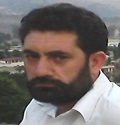
Farid Ahmad Raza
Khowar, also known as Chitrali, is an Indo-Aryan language of the Dardic group, spoken by over 400,000 people in Chitral in Khyber-Pakhtunkhwa, in the Ghizer District of Gilgit-Baltistan (the Yasin, Phandar Ishkoman and Punial valleys), and in parts of Upper Swat, in two villages of Kalam area: Ushu and Matiltan. Speakers of Khowar have also migrated heavily to Pakistan's major urban centers e.g. Peshawar, Islamabad, Lahore and Karachi, having sizeable populations there. The Khowar language shares common characteristics with other languages, but some features of Khowar are different from the other languages of the region.
PLURAL MARKING IN KHOWAR :
Plural marking is an intriguing feature of Khowar morphology. Most nouns remain in fact unmarked for plurality in the direct case, but there are certain groups of nouns where plural is marked explicitly, e.g human relations. Five kinds of case markers occur with nouns showing location and directions. A characteristic feature of the Khowar language is that it uses sher and asur thus differentiating inanimate from animate. Khowar (like Kalasha) has no grammatical gender. The Khowar language has participant (verb) agreement (person agreement) but no gender agreement. Khowar has two kinds of aspect, perfective and imperfective. Here are some of these features.Nouns Denoting Human Beings (Nominative Case)
| Khowar | Sing English | Khowar Plural | English Plural | Plural Marker |
| ɖaq | Boy | ɖaqan | Boys | -an |
| kimeri | Woman | kimerjan | Women | -an |
| moʃ | Man | moʃan | Men | -an |
| kumoru | Girl | kumoran | Girls | -an |
| dost | Friend | dostan | Friends | -an |
| nan | Mother | nanɡini | Mothers | -ɡini |
| tat | Father | tatɡini | Fathers | -ɡini |
| kaj | Sister | kajɡini | Sisters | -ɡini |
| brar | Brother | brarɡini | Brothers | -ɡini |
| mik | Uncle | mikɡini | Uncles | -ɡini |
| tseq | Child | tsitseq | Children | tsi- |
| phuk | Child | phuphuk | Children | phu- |
| loʈ | Elder | liloʈ | Elders | li- |
| moʃ | Man | moʃara | Man | ara- |
The above examples show that, in the nominative case, only humans can have plural marks in the Khowar language. Animals and inanimate things have no plural marks in the nominative case:
Animals and Insects:
| Khowar Sing: | English Sing: | Khowar Plural | English Plural: |
| reni | Dog | reni | Dogs |
| puʃi | Cat | puʃi | Cats |
| istor | Horse | istor | Horses |
| ɡordoɣ | Donkey | ɡord̪oɣ | Donkeys |
| kahak | Hen | kahak | Hens |
| ɡoɣ | Insect | ɡoɣ | Insects |
| leʃu | Cow | leʃu | Cows |
| reʂu | Bullock | reʃu | Bullocks |
| kelˠi | Sheep | kelˠi | Sheep |
| bojik | Bird | bojik | Birds |
The above examples show there is a distintion between 'human' and 'inhuman' in the language. The human terms have plural markers (regular –an; -gini for humans only, and reduplication). The 'inhuman' animate forms have no plural marker in the nominative case.
Inanimate:
| Sing Khowar | Sing English | Plural Khowar | Plural English |
| buʈ | Shoe | buʈ | Shoes |
| boxt | Stone | boxt | Stones |
| ʈʂaːn | Leaf | ʈʂa:n | Leaves |
| qalam | Pen | qalam | Pens |
| ɡilaːs | Glass | ɡila:s | Glasses |
| kursi | Chair | kursi | Chairs |
| uʃʈu | Brick | uʃʈu | Bricks |
| paloɣ | Apple | paloɣ | Apples |
| ʈonɡ | Pear | ʈonɡ | Pears |
| buthal | Bottle | buthal | Bottles |
Mass Nouns (Uncountable, No Plural Marking):
| Singular | Singular |
| uɣ | Water |
| ʈʂuti | Mud |
| boʂik | Rain |
| him | Snow |
| ʃuɣur | Sand |
The above examples show that mass nouns have no plural marker in Khowar.
OBLIQUE CASE MARKING:
Oblique Case:| Singular | Plural | Plural | Singular Oblique | Plural Oblique |
| kitab | kitabo | kitaban | o | an |
| buʈ | buʈo | buʈan | o | an |
| leʃu | leʃo | leʃan | o | an |
| reni | renjo | renjan | o | an |
| uʃʈu | uʃʈuo-/ʋo | uʃʈuan | o | an |
The above examples show that in Khowar there are oblique case markers -o and -an. For more information see below sentences:
Human beings.
| Singular | Plural |
| moʃ kura asur ? | moʃ-an kura asuni ? |
| man where is | man-PL where are |
| Where is the man? | Where are the men? |
Animals:
| Singular | Plural |
| reni kura asur? | reni kura asuni? |
| dog where is | dog where are |
| Where is the Dog? | Where are the Dogs? |
Inanimate:
| Singular | Plural |
| boxt kura ʃer ? | boxt kura ʃeni? |
| stone where is | stones where are |
| Where is the Stone? | Where are the Stones? |
Above all examples show nominative plural markers are only found with humans. There is no nominative plural marking for other living beings and inanimate things. Some researcher (mistakenly) mention oblique plural case marking in Khowar as plural markers.
In Khowar the special oblique occurs with nouns It seems that it occurs with definite objects (nouns), but not with unspecified nouns:
For example:
Kitabo anɡje. ---- 'Bring the book'
Kitaban anɡje. --- 'Bring the books.'
kitab anɡjy ------- 'Bring a book.'
| Singular | Plural | *Sentence |
| boxt̪ kura ʃer | bɔxt̪ kʊra ʃɛni | bɔxt̪-an Kʊra ʃɛni |
| stone where is 'Where is the stone? |
stone where are Where are the stones? |
- |
| lɛʃʊ kʊra asʊr | lɛʃʊ kʊra asʊni | leʃ-an kʊra asʊni |
| cow where is Where is the cow? |
cow where are Where are the Cows |
- |
| qalam kʊra ʃɛr | qalam kʊra ʃɛni | qalam-an kʊra ʃɛni |
| pen where is Where is the pen? |
pen where are Where are the pens? |
- |
Case marking:
Five kinds of case markers occur with nouns showing location and directions.
aʋa piʃaʋur-ar anɡom.i Peshawar-from will bring ------ I will bring it from Peshawar.
azan-o ʈema
azan-of time in ------------------ the time of Azan
piʃaʋur-a ɡanis
peshawar-in take --------------- you take it from Peshawar?
| Noun | case | Word | Meaning |
| Door/house | a | dur-a | On the house (in the house) |
| - | i | dur-i | In the house |
| - | tu | dur-to | to the house (on the house?) |
| - | ot | dur-ot | to the house |
| - | ar | dur-ar | From the house |
Grammatical Gender
The languages of the area have grammatical gender. Khowar language is unique that has no grammatical gender. You cannot differentiate Masculine and famine through the grammar. It is uses the same word for both genders.
| Khowar | English |
| moʃ ɡojan man coming |
A man is coming |
| kimeri ɡojan women coming |
A woman is coming |
| hes ɡojan he/she comming |
He/she is coming |
| uɣ ɡojan water coming |
Water is coming |
| ɖaq/komoru ɡojan boy/girl coming |
A boy/girl is coming |
| hes durote baɣaj he/she home went |
He/she went to their home. |
Animate and inanimate:
There is a unique feature of Khowar language which uses sher and asur thus differentiating inanimate from animate. A mention befor Kalasha, too, has this feture.
| Animate | Inanimate |
| Asur | Sher |
| bojik mez-o ʈeka asur bird table-OBL on is ANIMATE |
kitab mez-o ʈeka ʃer book table-OBL on is INANIMATE |
| A bird is on the wall | A book is on the table |
| kura asur? where is ANIMATE |
kura ʃer? Where is INANIMATE |
| Where is he/she? | Where is it? |
| kjaɣ asur what is ANIMATE |
kjaɣ ʃer what is INANIMATE |
| What is there | What is there |
Verb Agreement
Khowar language has participant (verb) agreement (person agreement), but no gender agreement.
| moʃ ɖaq-o iʃtikʰetaj | ɖaq moʃo iʃtikʰetaj |
| man boy-OBL praised | boy man-OBL praised. |
| 'The man praised the boy.' | 'The boy praised the person.' |
| ajmal hato dojan ajmal him is beating | hase ajmalo dojan he ajmal-OBL is beating |
| 'Ajmal is beating him.' | 'He is beating Ajmal.' |
| hase hato ɡani alaj | hase hato ɡani alaj |
| he him/her having taken brought. | he/she him/her having taken brought |
| 'He/She brought her with him.' | She/'He brought her with him.' |
Aspect in Khowar Language:
Khowar has two kinds of aspect, perfective and imperfective. One shows that an activity is not complete yet and the second shows completeness.
| Imperfective | Perfective |
| ava ʂapik ʐibav oʃtam | ava ʂapik ʐuti hatam |
| i food eating was | I food having.eaten came |
| 'I was eating food.' | 'Having eaten food I came.' |
Postposition in Khowar language
Postposition is a word used to show the relationship of a noun to something else, usually a location in space or time. The below examples show that just like the other languages of the area the Khowar language has postpositions. Here also the Khowar language has a unique feature in that it is used as case and postposition at the same time.
| Khowar | English |
| kitab mez-o ʈeka sher book table-OBL on is.INANIMATE |
The book is on the table. |
| qalam mez-o sora sher PEN TABLE-OBL ON -IS INANIMATE |
The pen is on the table |
| bojik kan-o mulˠa asur bird tree-OBL under is ANIMATE. |
The bird is under the tree |
| his house my house-OBL close is.INANIMATE. | His house situated is very close to my house |
The above example show that just like the other languages of the area Khowar language has also postpositions.
Appendix: List of Standard Abbreviations:
* : IncorrectPL : PLURAL
SG : Singular
SBJ : Subject
OBL : OBLIQUE
IPFV : Imperfective
PFV : Perfective
N- : Neuter
Bibliography:
Decker, Kendall D. (1992) Languages of Chitral
Baig, Rahmat Karim. Chitral a Study in State Craft Vol. I & II
: Faizi, Dr. Inayatullah. Development of Khowar as Literacy Language, Results of interaction between linguists and language Community.
Bukhari, Badesha Munir. Urdu aur Khowar Ke Lisani Ravabiṭ
Israr Ud Din and Elina Bashir. Proceedings of the Second International Hindu Kush Cultural Conference
Muhammad Naqibullah Razi, Khowar Zubān va Adāb (Urdu:) “Khowar) language) and literature” Anjuman Traqi Khowar.
Editor in chief a journal Khowar Nama for Khowar language.
Contact: Email: farid.mier@gmail.com